Wisdom Teeth Removal What You Need to Know
Dental Implants Costs, Components, and Key Considerations
Canker Sores Causes, Treatment, and When to See a Professional
Invisalign VS Traditional Braces Which Orthodontic Treatment is Right for You
Dental Savings Plans VS Dental Insurance Which One Saves You More
Roughly 72 million Americans have no dental coverage of any kind. Many more have coverage that runs out partway through a single significant procedure.
Two products compete for that gap, and they work on entirely different principles. Understanding the structural difference matters more than comparing monthly prices, because the right choice depends almost entirely on what dental work you expect to need.
How Dental Insurance Works
Dental insurance operates on a premium-and-benefit model. You pay a monthly premium, and the plan pays a percentage of covered procedures according to a schedule, typically after you meet a deductible.
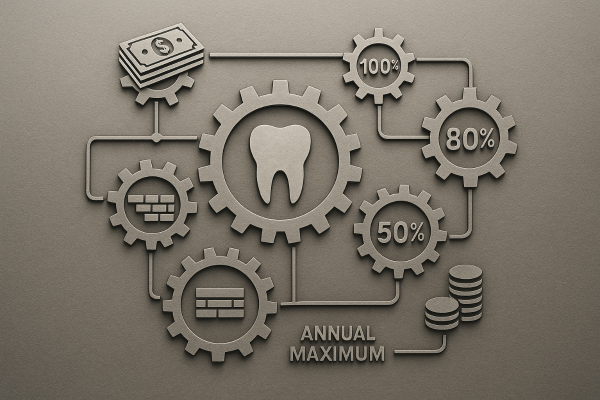
The standard structure follows a 100-80-50 pattern: preventive care such as exams and cleanings covered at or near 100 percent, basic services such as fillings at around 80 percent, and major services such as crowns, root canals, and dentures at around 50 percent.
Typical individual premiums run $20 to $60 per month, with deductibles commonly $50 to $100 per year. The defining constraint is the annual maximum, the most the plan will pay in a benefit year, which commonly sits between $1,000 and $2,000.
How Dental Savings Plans Work
A dental savings plan, sometimes called a discount plan, is not insurance at all. You pay an annual membership fee and receive access to reduced fee schedules at participating dentists.
Typical annual membership costs $100 to $200 for an individual and $150 to $300 for a family. Discounts commonly run 10 to 60 percent off the practice's standard fees, varying by procedure and network.
There is no annual maximum, no deductible, and no waiting period. You pay the discounted rate directly to the dentist at the time of treatment. There is also no reimbursement process, no claims paperwork, and no coverage determination that could be denied.
The Four Structural Differences That Matter
- Annual maximums. Insurance caps what it pays each year. Savings plans have no cap, which matters enormously for anyone facing extensive treatment.
- Waiting periods. Insurance commonly imposes 6 to 12 month waits on major services, sometimes longer. Savings plans typically activate within days.
- Pre-existing conditions. Insurance often includes missing tooth clauses and other exclusions. Savings plans generally have none, because they are discounts rather than coverage.
- Preventive care. Insurance usually covers cleanings fully, so the plan effectively pays for routine visits. Savings plans discount cleanings but never make them free.
Running the Numbers: Routine Care Only
Consider someone needing two cleanings, exams, and X-rays in a year, with no other treatment. Full cash cost is roughly $300 to $600.
With insurance at $30 per month, annual premiums total $360. Preventive care is covered at 100 percent, so out-of-pocket is close to zero, but total spend is $360. Roughly break-even, possibly slightly negative.

With a savings plan at $150 per year and a 25 percent discount, cleanings cost roughly $225 to $450 plus the $150 membership, totaling $375 to $600. Also roughly break-even.
For purely routine care, neither product saves much. Paying cash and asking whether the practice offers a discount for uninsured patients paying at time of service is often comparable.
Running the Numbers: One Major Procedure
Now consider someone needing a molar root canal and crown, with a cash cost of roughly $2,500.
With insurance at $360 in annual premiums, a $50 deductible, and a $1,500 annual maximum: the plan covers the root canal at perhaps 80 percent and the crown at 50 percent, producing plan payments that reach the maximum. Out-of-pocket lands around $1,000 to $1,200 plus premiums, totaling roughly $1,400 to $1,600.
With a savings plan at $150 and a 30 percent discount: $2,500 becomes roughly $1,750, plus the $150 membership, totaling $1,900.
Insurance wins here, provided you have already served any waiting period. If you purchased insurance last month and face a 12-month wait on major services, the savings plan wins decisively because it works immediately.
Running the Numbers: Extensive Treatment
Now consider someone needing $8,000 of work, such as multiple implants or full-mouth restoration.
Insurance pays up to its annual maximum, perhaps $1,500, and then stops. Out-of-pocket is roughly $6,500 plus $360 in premiums, totaling around $6,860. Treatment could be staged across two benefit years to capture two maximums, which is a legitimate strategy where clinically appropriate.
A savings plan with a 30 percent discount reduces $8,000 to roughly $5,600, plus $150 membership, totaling $5,750, all available immediately with no cap.
For extensive treatment, the absence of an annual maximum is the decisive factor and savings plans frequently come out ahead.
Using Both Together
This option is rarely mentioned and can be worthwhile. Some patients carry insurance for preventive care and the annual maximum, then use a savings plan for costs beyond that cap.
The mechanics vary by plan and practice, so confirm in advance whether a provider will apply a savings plan discount to amounts not covered by insurance. Not all will, but where they do, the combination covers both routine care and catastrophic cost.
Questions to Ask Before Enrolling
For either product, confirm that your current dentist participates. A discount or coverage level is irrelevant if you would have to change providers, and network participation changes over time.
For insurance, ask specifically about waiting periods by service category, the annual maximum, whether it includes a missing tooth clause, and how orthodontic and implant coverage is handled. For savings plans, ask for the actual fee schedule rather than the advertised discount range, since a 60 percent discount headline may apply only to a few procedures.
Other Ways to Reduce Dental Costs
Neither product is the only option, and several alternatives are worth knowing about before enrolling in anything.
- In-house membership plans offered directly by dental practices, typically an annual fee covering cleanings and exams plus a discount on other work. These often beat third-party savings plans if you are committed to one practice.
- Dental schools with accredited programs, where treatment is performed by supervised students at substantially reduced fees. Appointments take longer but the oversight is thorough.
- Federally Qualified Health Centers and community health centers offering sliding-scale fees based on income.
- Health savings accounts and flexible spending accounts, which let you pay for dental care with pre-tax dollars, effectively discounting every procedure by your marginal tax rate.
- Practice payment plans and third-party healthcare financing for spreading large costs over time.
The health savings account route is frequently overlooked and requires no enrollment in any dental product at all. For anyone with a qualifying high-deductible health plan, it applies to nearly all dental expenses.
Reading the Fine Print
Both products have terms that materially affect their value and are easy to skim past.
For insurance, check whether the plan uses a UCR schedule, a table of allowances, or a fee schedule, since these determine how much the plan actually pays for a procedure rather than just the stated percentage. Check whether coverage percentages apply to in-network providers only. Check frequency limitations, such as cleanings limited to once every six months rather than twice per calendar year, which sounds identical and is not.
For savings plans, request the actual fee schedule for the procedures you expect to need rather than relying on advertised discount ranges. Confirm how many participating dentists are genuinely within a reasonable distance, and verify directly with the practice that they currently participate, since network listings are frequently out of date.
A Simple Decision Framework
- Get a written treatment plan from your dentist listing everything you currently need, with costs.
- Confirm whether your dentist participates in any plan you are considering, by calling the practice rather than checking a website.
- Add up the annual cost of each option: premiums or membership fee, plus deductible, plus your estimated out-of-pocket for the planned treatment.
- Check waiting periods against your timeline. A plan that starts covering major work in twelve months is not useful for treatment you need in six weeks.
- Compare the total against simply paying cash and asking practices about prompt-payment discounts, which many offer to uninsured patients.
- Reassess annually, since your dental needs and the available plans both change.
Making the Choice
The decision comes down to expected need. If your dental history is stable and you mainly need cleanings, either product roughly breaks even and paying cash is a legitimate third option.
If you know you need one or two significant procedures and can wait out a waiting period, insurance usually costs less. If you need extensive work, need it soon, or have been told about treatment you have been postponing, a savings plan's lack of caps and waiting periods generally serves you better.
Before enrolling in anything, get a written treatment plan from your dentist listing what you actually need. Choosing a product before knowing the work is guessing, and the two structures diverge too sharply for guessing to work well.