Root Canal Cost What the Procedure Involves and What to Expect

What Counts as a Dental Emergency and What It Costs After Hours
Understanding Full Mouth Dental Implants Costs, Insurance, and Key Insights
Understanding Orthodontics A Comprehensive Guide to Treatment, Costs, and Options
Cavities and Fillings Material Options, Costs, and How Long Each Lasts
Fillings are the most frequently performed restorative procedure in American dentistry. Nearly every adult will need at least one, and many will need several over a lifetime.
Yet the choices involved are rarely explained in detail. Material selection affects cost, appearance, and how long the restoration lasts, and the differences between options are significant enough to be worth understanding before you are in the chair.
How Decay Actually Progresses
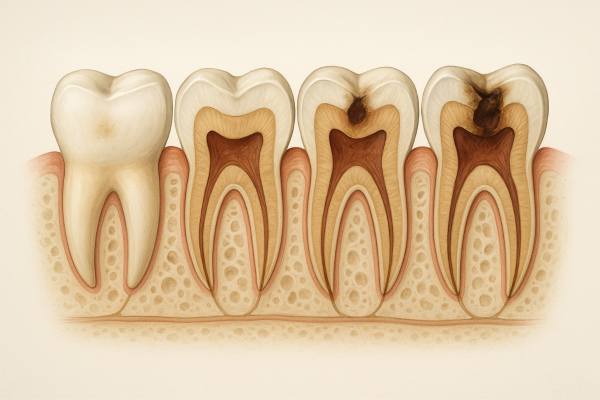
Tooth decay develops when bacteria in dental plaque metabolize sugars and produce acids that dissolve mineral from the tooth surface. The process moves through recognizable stages.
In the earliest stage, called demineralization, minerals are lost from the enamel but no hole has formed. This stage is reversible with fluoride and improved home care, which is one reason routine exams matter. Once the enamel surface breaks down and a cavity forms, the damage is permanent and requires restoration.
Decay that reaches the dentin, the softer layer beneath enamel, progresses faster because dentin is less mineralized. If it reaches the pulp, the nerve tissue at the center of the tooth, a filling is no longer sufficient and root canal treatment becomes necessary.
What Fillings Cost
Typical 2026 pricing without insurance runs roughly $90 to $450 per filling, with a national average near $226. The range is wide because both material and size matter.
A small single-surface filling on a front tooth sits at the low end. A large three-surface filling on a molar sits at the high end. Practices bill by the number of tooth surfaces involved, which is why two patients quoted for one filling each can receive very different estimates.
Most dental plans classify fillings as a basic service, commonly covered at 70 to 80 percent after the deductible. Some plans cover composite fillings only at the amalgam rate on back teeth, leaving the patient to pay the difference, which is worth confirming in advance.
Composite Resin
Composite is a tooth-colored plastic and glass mixture, and it is now the most commonly placed filling material in the United States. It is bonded directly to the tooth and hardened with a curing light.
Typical cost runs $150 to $450 depending on size and location. Expected lifespan is roughly 5 to 10 years, though well-placed composites in low-stress areas often last longer.
Advantages: it matches tooth color closely, bonds to the tooth structure, and requires removal of less healthy tooth than amalgam because it does not rely on mechanical retention. Disadvantages: it costs more, takes longer to place, and can be more prone to staining and wear in large restorations on heavy chewing surfaces.
Dental Amalgam
Amalgam is the traditional silver-colored material, an alloy containing silver, tin, copper, and mercury. Its use has declined substantially, but it remains available and in use.

Typical cost runs $90 to $250, making it the least expensive option. Expected lifespan is roughly 10 to 15 years, and amalgam is notably durable under heavy chewing forces.
Regarding safety, major health authorities including the FDA and the American Dental Association have concluded that amalgam is safe for most adults. The FDA has recommended that certain higher-risk groups, including pregnant and nursing individuals, young children, and people with specific conditions, avoid amalgam where practical alternatives exist. Patients with concerns should discuss them with their dentist rather than seeking removal of sound existing fillings, which releases more material than leaving them in place.
Gold and Ceramic Restorations
For larger cavities, indirect restorations such as inlays and onlays may be recommended instead of a standard filling. These are fabricated outside the mouth and then bonded or cemented into place.
Gold inlays and onlays typically run $800 to $2,500 and can last 20 years or longer, making them the most durable option available. The drawbacks are cost and appearance.
Ceramic or porcelain inlays and onlays typically run $700 to $2,000, last roughly 10 to 15 years, and offer excellent appearance and stain resistance. They are more brittle than gold and can fracture under extreme force, particularly in patients who grind their teeth.
When a Filling Is No Longer Enough
There is a threshold beyond which restoring a tooth with a filling stops being the right choice, and understanding it helps make sense of a treatment plan that recommends something more expensive.
- When more than roughly half the tooth structure is missing, a filling lacks sufficient support and a crown becomes the appropriate restoration, typically $800 to $2,500.
- When decay has reached the pulp, root canal treatment is required before any restoration.
- When a tooth has cracked, a filling can act as a wedge and worsen the fracture, so an onlay or crown is generally preferred.
- When a previous large filling has failed repeatedly, replacing it with a larger filling usually repeats the cycle.
- When the remaining tooth structure is too thin to withstand chewing forces, cusp coverage is needed.
What Shortens a Filling's Life
Fillings do not fail randomly. The most common causes are predictable and partly within your control.
New decay around the margin of an existing filling is the leading cause of replacement. This happens when plaque accumulates at the junction between filling and tooth, which is why flossing around restored teeth matters more, not less.
Teeth grinding places enormous repeated stress on restorations and is a frequent cause of fracture in both fillings and the teeth holding them. Chewing ice and hard candy causes acute damage. Large fillings in molars fail sooner than small fillings in front teeth simply because of the forces involved.
Reducing Your Risk of Needing More
Fluoride remains the most evidence-supported measure for preventing decay. Fluoride toothpaste used twice daily, along with community water fluoridation where available, meaningfully reduces cavity rates.
Dental sealants, thin protective coatings applied to the chewing surfaces of back teeth, are highly effective at preventing decay in those grooves. They typically cost $30 to $60 per tooth and are most commonly applied to children's permanent molars, though adults with deep grooves can benefit as well.
Frequency of sugar exposure matters more than total quantity. Sipping a sweetened drink over two hours produces a longer acid attack than consuming the same drink in ten minutes. Drinking water after meals and snacks helps clear residue.
Questions Worth Asking
When a filling is recommended, useful questions include: how many surfaces are involved, which material is being proposed and why, what my plan covers for that specific material, and whether this tooth is likely to need a crown in the foreseeable future.
If a dentist recommends replacing several existing fillings that are not causing symptoms, it is reasonable to ask what specifically is wrong with each one and whether monitoring is an option. Sound fillings do not need replacement on a schedule.
What to Expect During the Appointment
A straightforward filling typically takes 20 to 60 minutes depending on size and location. Local anesthetic is administered first, and most of the waiting is for it to take full effect.
The dentist removes decayed tissue, shapes the cavity, and places the material. Composite is placed in layers and hardened with a curing light between each one, which is why it takes longer than amalgam. The filling is then shaped and the bite checked.
That bite check matters. A filling left even slightly high causes soreness when chewing and can lead to sensitivity or cracking. If the tooth feels like it is hitting first when you bite down after the numbness wears off, call for an adjustment. It takes minutes and prevents weeks of discomfort.
Alternatives for Early Decay
Not every spot of decay requires drilling, and it is worth knowing what the alternatives are.
Early demineralization, before a cavity has formed, can often be remineralized with high-fluoride toothpaste, professional fluoride varnish, and improved home care. Dentists frequently monitor these areas over several appointments rather than treating immediately.
Silver diamine fluoride is a liquid applied to arrest active decay without drilling. It is inexpensive, typically $25 to $75 per application, and useful for young children, patients who cannot tolerate treatment, and situations where treatment must be delayed. Its significant drawback is that it stains the treated area black permanently, which limits its use on visible teeth.
Ask whether a watch-and-monitor approach is reasonable for small lesions. A responsible dentist will tell you honestly which areas need treatment now and which can be observed.
Getting a Second Opinion
Treatment planning for fillings involves genuine professional judgment, and two dentists examining the same mouth can reasonably reach different conclusions about borderline areas.
A second opinion is worth seeking if a new dentist recommends a large number of fillings when previous exams found few, if you have no symptoms and the recommendation is extensive, or if the proposed cost is substantial.
Request copies of your X-rays, which you are entitled to, and take them to the second appointment. This avoids repeat radiation exposure and additional imaging fees, and it lets the second dentist assess the same evidence.
Planning Around the Costs
A single filling is among the more affordable dental procedures, but several at once adds up, and the same decay left untreated moves toward root canal and crown territory at roughly ten times the cost.
If multiple fillings are recommended, ask which are urgent and which can be staged across benefit years. Most practices are willing to prioritize by severity, and spreading treatment across two annual maximums can substantially reduce out-of-pocket expense.