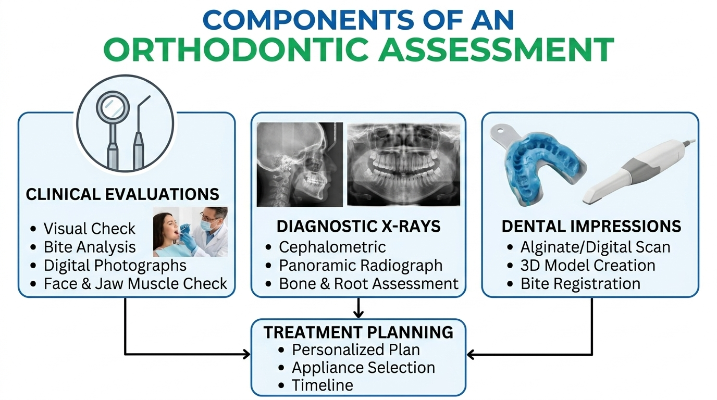
Orthodontic Assessment What to Expect and Why It Matters
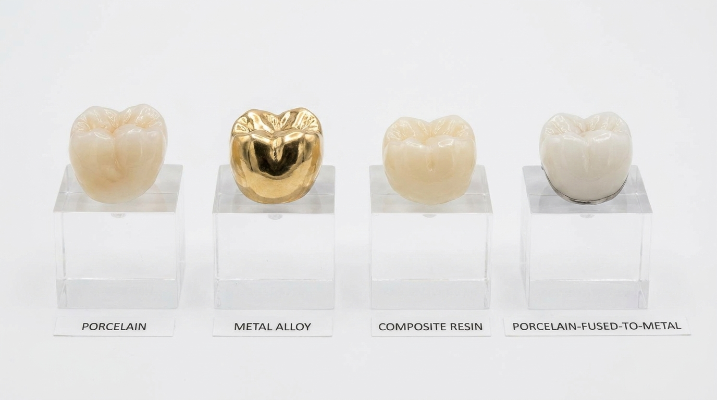
Dental Crowns What They Are, Why They Are Used, and How to Care for Them
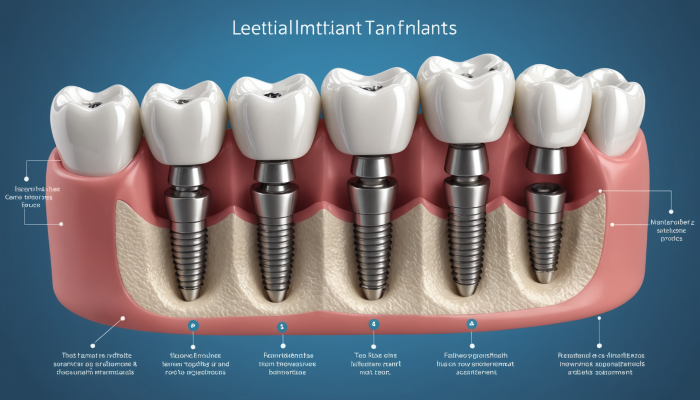
Understanding Full Mouth Dental Implants Costs, Insurance, and Key Insights
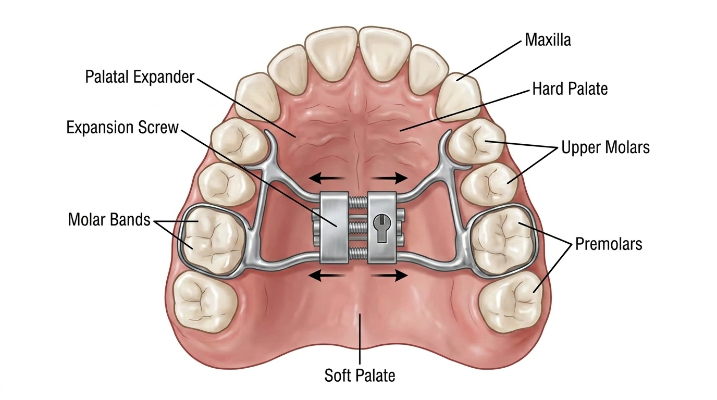
Understanding Orthodontic Palatal Expanders A Comprehensive Guide for Patients
Gum Disease Stages, Treatment Costs, and What Happens If You Wait
Gum disease is among the most common chronic conditions affecting American adults, and it is also among the most frequently overlooked. Federal health data indicates that roughly four in ten adults aged 30 and older have some form of periodontitis.
The condition progresses in stages, and the cost of treatment increases sharply at each one. Caught early, it can often be reversed with a routine cleaning and improved home care. Left untreated, it becomes the leading cause of tooth loss in adults.
Stage One: Gingivitis
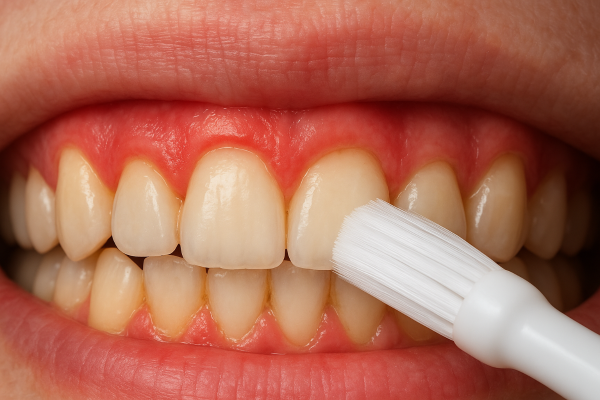
Gingivitis is inflammation of the gum tissue caused by bacterial plaque accumulating at the gumline. Signs include redness, swelling, tenderness, and bleeding during brushing or flossing.
The critical point about gingivitis is that it is reversible. No permanent damage has occurred to the bone or the fibers that attach the tooth to the jaw. A standard professional cleaning combined with consistent brushing and flossing typically resolves it within a few weeks.
Cost at this stage is simply the price of routine care: a typical exam, cleaning, and X-rays run roughly $75 to $350 without insurance, and most dental plans cover preventive cleanings at or near 100 percent, usually twice per year.
Stage Two: Early Periodontitis
When gingivitis is not addressed, inflammation spreads below the gumline. The gum tissue begins to separate from the tooth, forming pockets that trap bacteria in places a toothbrush cannot reach. Early bone loss begins.
This is where the condition becomes irreversible. The bone and attachment already lost will not regenerate on its own. Treatment shifts from prevention to management, and the goal becomes halting progression rather than restoring what has been lost.
Dentists measure pocket depth in millimeters during an exam. Healthy pockets measure roughly 1 to 3 millimeters. Readings of 4 millimeters or more generally indicate periodontal disease requiring treatment beyond a routine cleaning.
Scaling and Root Planing: What a Deep Cleaning Costs
Scaling and root planing, commonly called a deep cleaning, is the standard treatment for periodontitis. The dentist or hygienist removes hardened deposits from below the gumline and smooths the root surfaces so the tissue can reattach.
It is priced per quadrant, meaning each quarter of the mouth. Typical 2026 costs run roughly $150 to $435 per quadrant, depending on how much hardened tartar is present and how deep the pockets are. Full-mouth treatment across all four quadrants generally falls between $600 and $1,400.

Light deposits with shallow 4 millimeter pockets sit at the lower end. Heavy deposits with 5 millimeter or deeper pockets and documented bone loss sit at the upper end, because the work takes more time. Ask to see your probing depth measurements and X-rays, which is how a practice justifies where your case falls.
The Recurring Cost Most Guides Skip
This is the part patients are rarely told in advance. After scaling and root planing, you do not return to standard twice-yearly cleanings. You transition to periodontal maintenance, typically every three to four months.
Periodontal maintenance visits run roughly $115 to $300 each. At four visits per year, that is approximately $460 to $1,200 annually, indefinitely. Most dental plans fund only two cleanings per year, so the third and fourth visits are frequently out of pocket, commonly adding $230 to $600 a year.
Over several years, that recurring figure often exceeds the one-time cost of the deep cleaning itself. It is the genuine long-term financial consequence of allowing gum disease to progress past the reversible stage.
Stage Three and Four: Advanced Periodontitis
In moderate to advanced disease, pockets deepen further, substantial bone is lost, and teeth may become loose or shift position. At this point, non-surgical treatment alone is often insufficient.
Surgical options may be required. Flap surgery, in which gum tissue is lifted to allow thorough cleaning of root surfaces and then repositioned, commonly runs $1,000 to $3,000 per quadrant. Bone grafting to rebuild lost support typically runs $300 to $1,500 per site, and soft tissue grafting for gum recession runs $600 to $3,000 per site.
If teeth are lost, replacement costs enter the picture: roughly $3,000 to $6,000 for a single implant, or $2,000 to $5,000 for a three-unit bridge. A condition that could have been reversed with a $150 cleaning can reach five figures across a full mouth.
Why It Often Goes Unnoticed
Periodontitis is usually painless until it is advanced, which is the central reason it progresses. There is rarely a moment that prompts someone to call a dentist.
Warning signs worth acting on include gums that bleed during brushing or flossing, persistent bad breath, gums that appear to be pulling away from the teeth, teeth that feel loose or seem to have shifted, a change in how the bite fits together, and sensitivity along the gumline.
Bleeding gums in particular are commonly dismissed as normal or attributed to brushing too hard. Healthy gum tissue does not routinely bleed during gentle brushing, and persistent bleeding is worth a professional evaluation.
Risk Factors That Raise Your Odds
- Smoking and tobacco use, which is among the strongest risk factors and also reduces how well treatment works.
- Diabetes, which has a well-documented two-way relationship with periodontal disease.
- Genetics and family history of gum disease.
- Hormonal changes during pregnancy and menopause, which can increase gum sensitivity.
- Certain medications that reduce saliva flow, since saliva helps control bacteria.
- Inconsistent home care and skipped professional cleanings.
How Insurance Handles Periodontal Treatment
Routine preventive cleanings are usually covered at or near 100 percent. Scaling and root planing is classified differently, typically as a basic or periodontal service covered at roughly 50 to 80 percent after the deductible, and only once medical necessity is documented through pocket measurements and radiographic bone loss.
Surgical periodontal treatment is generally a major service at around 50 percent coverage, and it will draw heavily against an annual maximum that commonly sits between $1,000 and $2,000. Treatment spanning multiple quadrants is sometimes staged across two benefit years for this reason.
The Connection to Overall Health
Periodontal disease has been studied in relation to several systemic conditions, and while the nature of the relationship is still being clarified, the associations are consistent enough to be worth knowing.
The clearest relationship is with diabetes, and it runs both directions. Poorly controlled blood sugar makes periodontal disease more likely and more severe, while active periodontal infection can make blood sugar harder to control. Treating gum disease in people with diabetes sometimes improves glycemic markers.
Associations have also been reported with cardiovascular disease and with adverse pregnancy outcomes. It is important to be precise here: association is not the same as proven causation, and research is ongoing. What is clear is that periodontal disease represents chronic inflammation and chronic bacterial infection, and reducing that is worthwhile regardless of how the systemic links resolve.
Home Care That Genuinely Makes a Difference
Professional treatment removes what has accumulated. Home care determines whether it comes back, and this is where most of the long-term outcome is decided.
- Brush twice daily for two full minutes with a soft-bristled brush angled toward the gumline at roughly 45 degrees. Aggressive scrubbing damages gums rather than cleaning them better.
- Clean between teeth daily. Floss, interdental brushes, or a water flosser all work; the best tool is the one you will actually use consistently. Interdental brushes are often more effective than floss where gaps have widened.
- Consider an electric toothbrush with a pressure sensor. Evidence supports modest improvements in plaque removal, and the pressure feedback helps break heavy-handed brushing habits.
- Use an antimicrobial mouth rinse if recommended, but understand it supplements mechanical cleaning rather than replacing it.
- Stop tobacco use. Nothing else in this list produces a comparable improvement in periodontal outcomes.
What to Expect at a Periodontal Appointment
A periodontal evaluation involves measuring pocket depths at six points around every tooth, checking for bleeding on probing, assessing gum recession, testing tooth mobility, and reviewing X-rays for bone levels.
Ask for your numbers. A full periodontal chart shows exactly where the problem areas are, and comparing charts across visits is the clearest way to see whether treatment is working or disease is progressing.
Scaling and root planing is typically performed with local anesthesia, often one or two quadrants per appointment. Expect some tenderness and sensitivity for several days afterward. A follow-up evaluation four to six weeks later re-measures pockets to assess response, and that appointment matters — it determines whether further treatment is needed.
The Practical Takeaway
The cost curve for gum disease is unusually steep. Prevention costs the price of two cleanings a year. Early treatment costs several hundred to a bit over a thousand dollars once. Advanced treatment costs thousands, plus a permanent recurring maintenance schedule, plus the possibility of replacing teeth entirely.
At your next appointment, ask for your probing depth numbers and ask whether any readings are 4 millimeters or higher. That single question tells you which stage you are in, and it is the most useful piece of information available for planning what comes next.