
Teeth Grinding and Night Guards Types, Costs, and Whether You Need One
Dental Implants A Comprehensive Guide to Oral Health Solutions
Dental Crowns What They Are, Why They Are Used, and How to Care for Them
Understanding Orthodontics A Comprehensive Guide to Treatment, Costs, and Options
Dental Veneers Cost, Candidacy, and the Questions to Ask First
Veneers are thin shells bonded to the front surfaces of teeth to change their color, shape, length, or alignment. They have become one of the most visible cosmetic dental treatments, and also one of the most misunderstood.
The central fact that gets lost in most marketing is that traditional veneers are irreversible. Understanding what that means, and what the alternatives are, matters more than comparing prices.
What Veneers Cost
Porcelain veneers typically run $900 to $2,500 per tooth, with most practices falling between $1,000 and $1,800. Because veneers are usually placed across the visible smile zone rather than on a single tooth, treatment commonly involves six to ten teeth.
That produces realistic total costs of roughly $6,000 to $20,000 for a full smile treatment. Composite veneers, applied directly by the dentist in a single visit, typically run $250 to $1,500 per tooth, which brings a comparable treatment to roughly $1,500 to $10,000.
Dental insurance generally does not cover veneers, because they are classified as cosmetic rather than medically necessary. There are narrow exceptions where a veneer restores a tooth damaged by trauma or decay, and it is worth asking, but the default is that this is a self-funded treatment.
Porcelain Versus Composite
Porcelain veneers are fabricated in a dental laboratory from impressions or digital scans, then bonded in a second appointment. They resist staining well, reflect light in a way that closely mimics natural enamel, and typically last 10 to 15 years or more.
Composite veneers are sculpted directly onto the tooth from resin during a single visit. They cost less, can often be repaired if chipped, and require less or sometimes no removal of tooth structure. They stain more readily and typically last 4 to 8 years.
Neither is universally better. Composite makes sense for a limited budget, for younger patients, or as a trial before committing to porcelain. Porcelain makes sense when longevity and appearance are the priorities and the budget allows.
The Permanence Question
Traditional porcelain veneers require removing a thin layer of enamel from the front of each tooth, typically around half a millimeter, to make room for the shell and allow proper bonding.
Enamel does not grow back. Once it has been removed, those teeth will require a veneer, crown, or similar restoration for the rest of your life. If a veneer fails or you dislike the result, the path forward is replacement, not reversal.
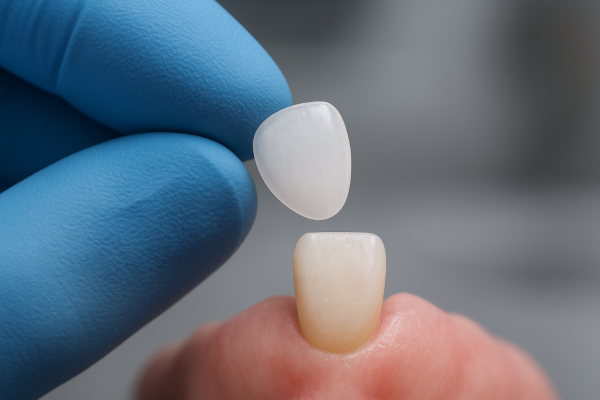
Some cases can be treated with minimal-preparation or no-preparation veneers, which are thinner and remove little or no enamel. Not every patient is a candidate for these, and they suit situations where teeth are already slightly undersized or set back. Ask specifically whether your case allows for a minimal-prep approach.
Who Is a Good Candidate
Veneers address appearance, not health. They are appropriate for discoloration that does not respond to whitening, chips and minor fractures, teeth that are worn short, small gaps, and mild irregularities in shape or alignment.
Certain conditions need addressing first. Active decay must be treated. Gum disease must be stabilized, because veneers bonded to teeth with progressing periodontal disease will eventually have gum recession exposing their margins. Untreated grinding will fracture porcelain, so a night guard is usually required as part of the plan.
Significant crowding or bite problems are generally better treated with orthodontics than masked with veneers. A common and expensive mistake is using veneers to disguise alignment issues that braces or clear aligners would correct at lower cost and without removing enamel.
Alternatives Worth Considering First
- Professional whitening, at roughly $200 to $1,000, addresses discoloration alone at a fraction of veneer cost and removes no tooth structure.
- Dental bonding, at roughly $300 to $600 per tooth, repairs chips and small gaps directly and is fully reversible.
- Clear aligners or braces, at roughly $3,000 to $8,000, correct actual alignment rather than concealing it.
- Enamel contouring, a minor reshaping procedure, can smooth uneven edges inexpensively.
- A single crown may be more appropriate than a veneer for a tooth that is structurally compromised rather than just cosmetically imperfect.
A reasonable sequence for many patients is orthodontics first if alignment is an issue, then whitening, then veneers only for what remains unaddressed. This frequently reduces the number of veneers needed, which reduces cost substantially.
The Treatment Process
Treatment typically begins with a consultation including photographs, impressions or scans, and a discussion of goals. Many practices produce a diagnostic wax-up, a physical or digital model showing the proposed result.
Some offer a trial smile, where a temporary version is placed directly over your teeth so you can see the proposed shape and length before any enamel is removed. If this is available, it is worth requesting. Seeing the design in your own mouth is far more informative than viewing a model.
At the preparation appointment, enamel is reduced, impressions are taken, and temporary veneers are placed. The permanent veneers are bonded at a second appointment typically one to three weeks later.
Living With Veneers
Veneers do not require special products, but they do require consistent care. Brushing twice daily, flossing, and regular professional cleanings remain essential, because the underlying teeth can still decay and the gums can still recede.
Habits to avoid: biting nails, chewing ice or pens, opening packaging with your teeth, and grinding. A night guard is strongly advisable for anyone who clenches or grinds, typically $300 to $800 from a dental office.

Porcelain does not whiten. If you whiten your remaining natural teeth after veneers are placed, the veneers stay their original shade. Whitening, if desired, should be completed before veneer shade is selected.
Questions to Ask Before Committing
- How much enamel will be removed from each tooth, and am I a candidate for a minimal-preparation approach?
- Can I see a wax-up or trial smile before any preparation is done?
- How many teeth are you recommending and why that number specifically?
- What is the warranty or replacement policy if a veneer chips or debonds?
- Would orthodontics or whitening reduce the number of veneers I need?
- May I see before-and-after photographs of your own cases, not stock images?
How Long Veneers Last and What Fails
Porcelain veneers commonly last 10 to 15 years and sometimes considerably longer with good care. Composite veneers typically last 4 to 8 years. Neither is permanent, and replacement cost should be part of the original budget conversation.
The most common failure modes are debonding, where the veneer comes loose from the tooth, chipping or fracture of the porcelain, and staining at the margin where the veneer meets the tooth. Gum recession over time can also expose the margin, creating a visible line.
Decay can still develop in the tooth underneath, which is why regular exams and X-rays continue to matter. A veneer covers the front surface only; the rest of the tooth remains exposed to the same risks as any other.
Choosing a Dentist for Cosmetic Work
Cosmetic dentistry is not a recognized dental specialty in the United States, which means any licensed dentist may advertise cosmetic services. Experience varies enormously, and the result depends heavily on the individual clinician and the laboratory they work with.
- Ask to see before-and-after photographs of the dentist's own patients, not stock images supplied by a manufacturer.
- Ask how many veneer cases they complete in a typical year.
- Ask which dental laboratory they use and whether the technician has experience with anterior esthetic work.
- Ask about continuing education specifically in esthetic or restorative dentistry.
- Ask whether they offer a trial smile or wax-up as standard.
- Be cautious about very low prices, since laboratory quality is a large part of the cost and the difference is visible.
Dental Tourism: What to Weigh
Veneer treatment abroad is heavily marketed and can cost substantially less, sometimes a third of US pricing. It is worth considering carefully rather than dismissing or accepting outright.
The genuine risks are practical. Follow-up care is difficult if something goes wrong after you return home, and local dentists are often reluctant to take on correcting another practice's work. Compressed treatment timelines, with preparation and placement in a few days, remove the opportunity to adjust the result. Standards and recourse vary by country.
If you pursue it, research the individual clinician rather than the clinic's marketing, plan a realistic trip length rather than the minimum offered, confirm what warranty exists and whether it is enforceable, and budget for the possibility of needing corrective work at home.
Deciding Carefully
Veneers can produce genuinely excellent results, and for the right patient with the right expectations they are a satisfying treatment. They are also expensive, irreversible, and require lifelong maintenance and eventual replacement.
Before committing, get at least two consultations from practices with substantial cosmetic experience, ask each what they would do differently, and price the alternatives in the same visit. A decision this permanent deserves more than one opinion.